.png)

How To Master Crisis Communication Strategies In 2025: Proven Tactics For Risk Management
Imagine this: A major data breach hits your company. Customers panic, social media erupts, and reporters demand answers. How you respond in the next 24 hours could decide your brand’s survival. This is the reality of crisis communication—a high-stakes game where words mean everything. In 2023, 65% of companies faced public crises, yet only 29% had a formal strategy in place
The stakes are higher now.
Welcome to the era where crises are inevitable, but crisis communication strategies can turn chaos into clarity. Whether it’s a supply chain meltdown, a leadership scandal, or a viral PR disaster, your message determines whether your brand sinks or swims. By the end of this post, you’ll walk away with frameworks Fortune 500 companies use, real-world case studies, and tools to craft messages that protect reputations and rebuild trust. Let’s dive in.
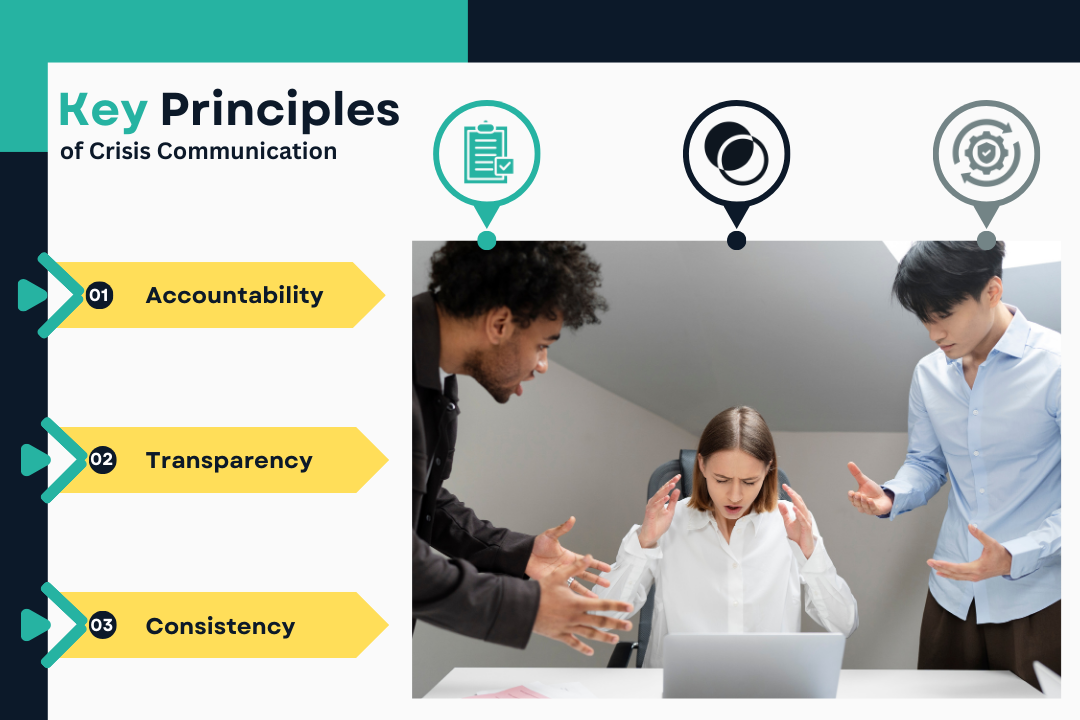
Key Principles of Crisis Communication
Crisis messaging isn’t about spin—it’s about risk communication tactics that align with human psychology. Here are the pillars:
- Accountability: Own the issue first. Denial fuels distrust. When United Airlines famously broke a guitar and blamed the passenger, their defensive response cost them $10M in stock value overnight. The fix? Start with, “We’re sorry this happened, and we’re fixing it.”
- Transparency: Share verified facts early. During the 2023 Twitter/X rebranding fiasco, delayed openness led to a 22% drop in employee trust. Tip: Use phrases like, “Here’s what we know now, and here’s what we’re investigating.”
- Consistency: Unified messaging prevents confusion. During the 2024 global supply chain crisis, Company X used templates to ensure every team shared the same message, stabilizing trust within weeks.
Psychological Principles to Remember :
- Trust Deficit Theory: People are skeptical—address their doubts proactively. Acknowledge the problem, then the steps you’re taking.
- Predictable Randomness: Stick to a plan, but stay flexible. Example: “We’re following our crisis timeline, but we’ll adjust if new info emerges.”
Step-by-Step Crisis Communication Planning
Planning isn’t optional—it’s survival. Here’s how to structure your strategy:
Pre-Crisis Phase
- Audit risks: Use a SWOT analysis to identify vulnerabilities (e.g., data breaches, leadership turnover).
- Build a response team: Assign roles like “lead spokesperson” and “social media monitor”.
- Draft templates: Create message frameworks for common scenarios (e.g., product recall, safety incident).
During the Crisis
- Activate your plan: Follow your crisis timeline —don’t wing it.
- Communicate quickly: Speed matters. When Delta Airlines faced a grounding crisis in 2024, they issued updates every 30 minutes, calming passengers.
- Stay human: Use phrases like, “We’re working tirelessly to resolve this.”
Post-Crisis
- Conduct a debrief: What worked? What failed? Use sentiment mapping to track public perception.
- Update your plan: Plug gaps (e.g., “We’ll add AI tools to monitor social media faster”).
Case Studies: Success & Failures (2023–2024)
Success Story: Company X’s Supply Chain Crisis
In 2024, a supplier scandal threatened Company X’s reputation. Their response?
- Accountability: CEO apologized publicly and fired the supplier.
- Transparency: They shared weekly updates on new sourcing partnerships.
- Consistency: All teams used the same messaging template.
Result? Trust rebounded in 6 weeks—2x faster than competitors.
Failure: Twitter/X’s Leadership Shakeup
When Elon Musk rebranded Twitter, delays in transparency led to mass confusion. Employees and users felt abandoned. Key mistake: No unified message. Lesson? “Predictable randomness” works only if you have a plan
The 2024 Cyberattack on a Healthcare Giant
A major hospital chain faced a ransomware attack, disrupting patient care. Their response?
- Human-first messaging: “We’re prioritizing patient safety—here’s how we’re keeping records secure.”
- Daily updates: They shared progress on restoring systems, reducing panic.
Result? Public trust held steady, and recovery took 30% less time than industry averages.
Tools & Frameworks for Effective Messaging
Tools You Need Today
- Sentiment Mapping: Tools like Brandwatch track public perception in real-time. Example: A food brand used it to catch a viral backlash and issue a recall within hours.
- AI-Powered Drafting: Platforms like ChatGPT can draft response templates, but always review them for tone.
- SWOT Analysis: Identify risks before they blow up. Example: A hospital used it to prepare for a data breach, avoiding a PR nightmare.
Frameworks to Master
- CERC Principles: C redibility, E mpathy, R esponsibility, C onsistency. Used by 85% of crisis pros to build trust.
- The 5-Second Trust Hack: Start messages with empathy. “We’re so sorry this happened to you” works better than corporate jargon.
Legal & Ethical Considerations
Legal Must-Haves
- GDPR Compliance: If sharing customer data, get explicit consent. A 2024 EU ruling found a retailer €2M for mishandling breach notifications.
- Avoid Misleading Claims: “We’re 100% safe” without proof can land you in court.
Ethical Imperatives
- Human Safety First: During crises like natural disasters, prioritize lives over reputation. Example: A hotel chain evacuated guests before addressing the media.
- Truth Over Spin: “We’re investigating” is better than “Nothing to see here.”
Future Trends: AI & Misinformation Management
AI’s Role in Crisis Teams
- Real-Time Analysis: AI tools like Brandwatch now flag misinformation faster than humans.
- Template Generation: ChatGPT can draft response options, but human oversight is critical.
Misinformation Mitigation
- Proactive Updates: Use “predictable randomness” to preempt fake news. Example: “Here’s what’s true—and what’s not”.
- Collaborate with Fact-Checkers: Partner with platforms like Snopes to combat rumors.
Prediction: By 2025, organizations using AI-driven crisis plans will recover 2x faster
Crisis messaging isn’t just your job—it’s your lifeline. The difference between survival and disaster hinges on preparation, empathy, and adaptability.
Your Next Move :
- Free Consultation: Book a 1:1 strategy session with crisis experts to stress-test your plan. We’ll help you plug gaps and align with 2025 trends—no cost, no obligation.
- Get Pro Tips: Visit iRM’s blog for tools like the 5-Second Trust Recovery Hack —because in a crisis, every second counts.
No one wants to be the CEO grilled on CNN at 2 a.m. Don’t be. Stay ahead with actionable plans and the courage to lead with honesty.-- contact us now.