.png)

Master KRIs: Revolutionize Your Risk Management Strategy Now
Hey there! Let's kick things off with a simple question: What are Key Risk Indicators (KRIs)? Imagine you're driving a car. You've got your speedometer, fuel gauge, and other little lights that tell you if something's off. Those are your indicators, right? In the world of business, KRIs are like those dashboard lights. They help you see potential problems before they become big headaches.
Risk management is all about spotting trouble early and dealing with it. KRIs are the tools that make this possible. They're like your business's early warning system, giving you a heads-up when things might go south. And in today's fast-paced business world, having a good early warning system can be the difference between success and, well, not-so-success.
The Role of KRIs in Modern Risk Management
Let's take a trip down memory lane. Back in the day, risk management was more of a gut-feeling thing. Managers would make decisions based on experience and intuition. But as businesses grew more complex, relying on gut feelings just wasn't enough. That's where KRIs come in.
Fast forward to today, and KRIs are all about using data to make smart decisions. Instead of guessing, you can look at real numbers and trends. This data-driven approach helps you understand what's going on in your business and make better choices. It's like having a crystal ball that shows you the future but with spreadsheets instead of magic.
Selecting Effective KRIs
Alright, so you know KRIs are important. But how do you pick the right ones? Think of it like choosing the right tools for a job. You wouldn't use a hammer to fix a leaky pipe, right? The same goes for KRIs. You need to pick the ones that fit your business best.
So, what should you look for? First, relevance. Your KRIs need to match the risks you face. If you're in finance, you might track market volatility. If you're in healthcare, patient satisfaction scores could be key. Second, simplicity. You don't need a Ph.D. to understand your KRIs. They should be easy to grasp and use. Finally, timeliness. Good KRIs give you information when you need it, not weeks later.
Let's look at some real-world examples. In the finance world, JPMorgan Chase uses KRIs to monitor market risks. They track things like interest rate changes and stock market fluctuations. In healthcare, Mayo Clinic uses KRIs to keep an eye on patient safety. They track infection rates and patient feedback. These examples show how different industries use KRIs to stay on top of their game.
Implementing KRIs in Your Organization
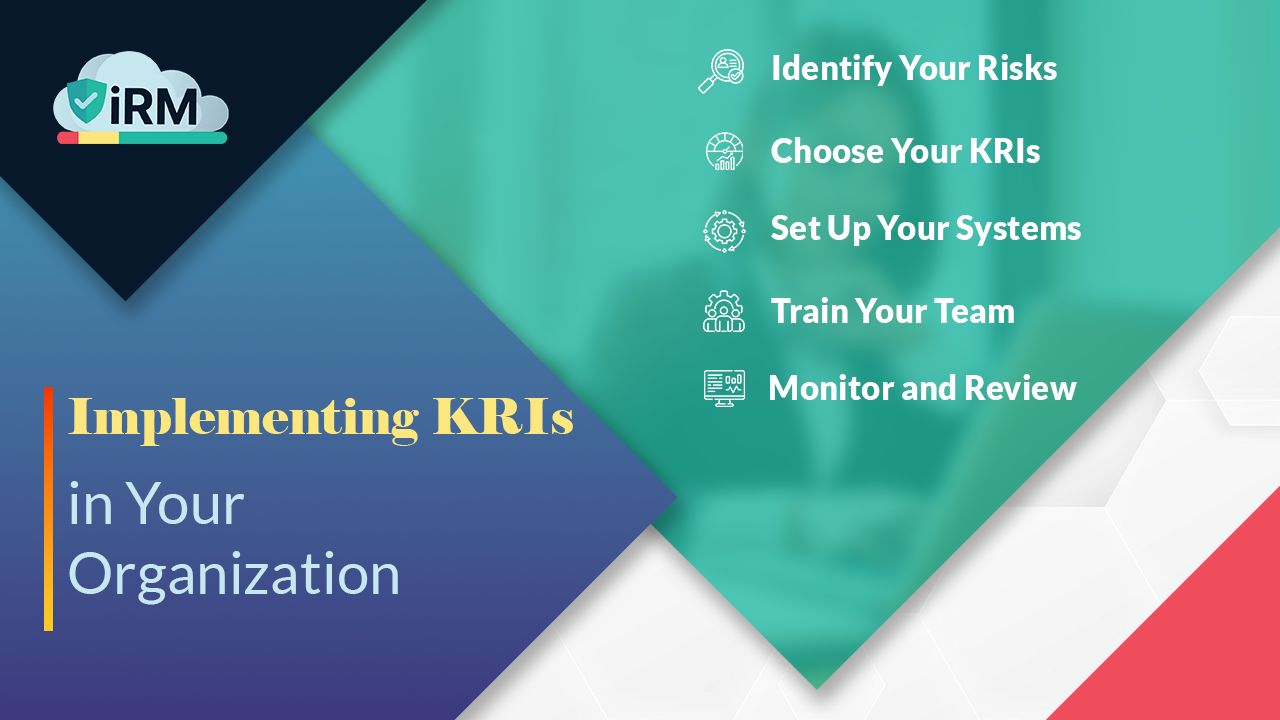
Okay, you've picked your KRIs. Now what? Implementing them is like setting up a new gadget. You need a plan, and you need to follow it. Here's a step-by-step guide to get you started:
- Identify Your Risks: Start by listing the biggest risks your business faces. Be specific.
- Choose Your KRIs: Based on those risks, pick the KRIs that will give you the best insights.
- Set Up Your Systems: Use software or spreadsheets to track your KRIs. Make sure everyone knows how to use them.
- Train Your Team: Everyone from top executives to frontline workers should understand how KRIs work and why they matter.
- Monitor and Review: Regularly check your KRIs and see how they're doing. Adjust as needed.
But watch out for common pitfalls. One big one is overcomplicating things. Don't try to track every single risk with a KRI. Focus on the most important ones. Another pitfall is ignoring the data. If your KRIs are telling you something, listen! Ignoring them is like ignoring the "check engine" light in your car.
Case Studies of KRI Success Stories
Let's dive into some success stories to see how KRIs can make a real difference. In the finance sector, Goldman Sachs implemented KRIs to manage market risks. They tracked things like trading volumes and credit spreads. By doing this, they were able to spot potential issues early and adjust their strategies. The result? They avoided major losses during market downturns.
In healthcare, the Cleveland Clinic used KRIs to improve patient care. They tracked infection rates, patient satisfaction, and wait times. By monitoring these metrics, they were able to make changes that improved patient outcomes. For example, they reduced infection rates by 30% and increased patient satisfaction scores by 25%.
These examples show that KRIs aren't just theoretical. They're practical tools that can make a real impact on your business.
Monitoring and Adjusting KRIs
Implementing KRIs is just the beginning. To get the most out of them, you need to keep an eye on them and make adjustments as needed. Think of it like maintaining your car. You don't just set it up and forget it. You check the oil, rotate the tires, and make sure everything's running smoothly.
Continuous improvement is key. Regularly review your KRIs and see if they're giving you the insights you need. If not, tweak them. Maybe you need to track a different metric or change how you collect data. The goal is to keep your KRIs relevant and useful.
Tools and technologies can help with this. There are plenty of software solutions out there designed to track and analyze KRIs. These tools can save you time and give you more accurate insights. But remember, the tool is only as good as the person using it. Make sure your team is trained and comfortable with the technology.
Impact of KRIs on Decision Making
KRIs are all about helping you make better decisions. But how do they do that? Let's break it down. First, you've got quantitative analysis. This is all about numbers. How many customers are complaining? How much is your stock price fluctuating? These numbers give you a clear picture of what's going on.
Then there's qualitative analysis. This is about the "why" behind the numbers. Why are customers unhappy? Why is your stock price dropping? By combining both types of analysis, you get a complete picture. This helps you make smarter decisions.
The strategic outcomes of using KRIs can be huge. You can spot trends early and adjust your strategy. For example, if you see customer complaints rising, you can address the issue before it becomes a bigger problem. This proactive approach can save you time, money, and headaches.
Future of Risk Management with KRIs
Looking ahead, the future of risk management is exciting. Emerging trends like artificial intelligence and machine learning are changing the game. These technologies can analyze vast amounts of data and spot patterns humans might miss. Predictive analytics is another big trend. Instead of just reacting to risks, you can predict them and take action before they happen.
But the core idea remains the same: KRIs are your early warning system. By staying on top of your KRIs and using the latest technologies, you can navigate the future with confidence.
Ready to take the next step? Contact us now and revolutionize Your Risk Management Strategy Now