.png)

No More Spreadsheets: Next-Gen Risk Control with iRM Cloud
Managing risk and compliance has long been a cumbersome process, often dominated by complex spreadsheets, manual data entry, and endless email threads. While spreadsheets are a familiar tool, they’re prone to human error, data silos, and inefficiencies that can cripple a business’s ability to properly manage risks. In today’s fast-paced, compliance-driven world, businesses need a more sophisticated approach to governance, risk management, and compliance (GRC). That’s where iRM Cloud comes in.
iRM is designed to replace traditional spreadsheet-based risk management processes with a streamlined, automated platform that provides real-time insights and full integration into your existing systems.
The Spreadsheet Problem in Risk Management
Let’s start by addressing the elephant in the room—spreadsheets. While they may be useful for tracking simple data, they quickly become unmanageable as organizations scale or as the complexity of compliance requirements increases. Relying on spreadsheets for risk control introduces a range of challenges:
- Human Error: Manual data entry increases the likelihood of mistakes, leading to incorrect risk assessments or compliance failures.
- Lack of Collaboration: Spreadsheets are often shared across departments via email, creating version control issues and limiting real-time collaboration.
- Inefficiency: Constant updates and reviews take up valuable time that could be better spent on strategic activities.
- Limited Reporting: Gathering insights or generating reports from spreadsheets is time-consuming, often resulting in outdated or inaccurate information.
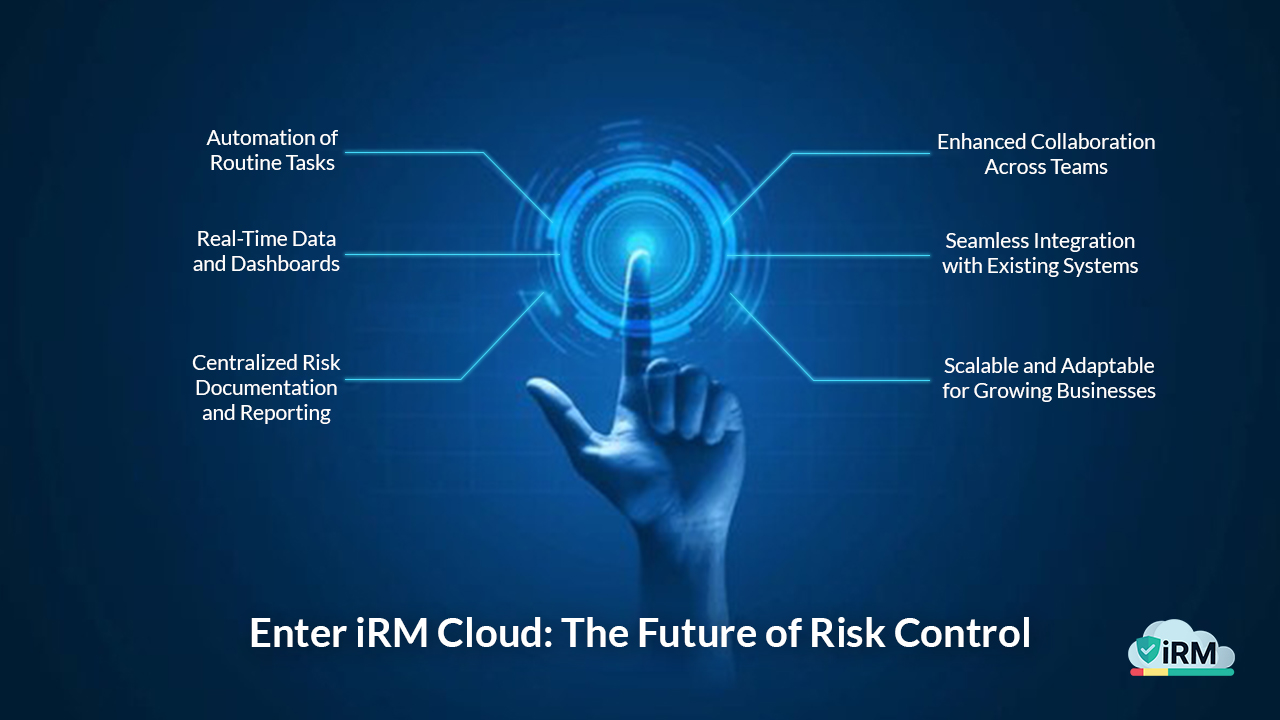
Enter iRM Cloud: The Future of Risk Control
iRM eliminates the inefficiencies of spreadsheets by offering an all-in-one platform for automated risk management. It simplifies compliance, enhances visibility, and enables seamless collaboration across departments. Here are some key ways iRM is redefining the future of risk control:
1. Automation of Routine Tasks
One of the major benefits of iRM is the automation of repetitive tasks like risk assessments, compliance checks, and reporting. Instead of manually entering data or hunting down updates in scattered spreadsheets, iRM automatically gathers, tracks, and analyzes relevant risk metrics.
For instance, it can automate the collection of audit trail information, check for compliance with various regulations, and even generate reports in just a few clicks. This not only reduces the risk of human error but also frees up your team’s time to focus on more strategic tasks.
2. Real-Time Data and Dashboards
In contrast to static spreadsheets that require constant updates, iRM offers real-time data access through interactive dashboards. These dashboards provide a bird’s-eye view of your organization’s risk landscape, allowing you to track key risk indicators and make informed decisions instantly.
The dashboards are fully customizable, enabling you to monitor the metrics that matter most to your business—whether it’s financial risk, regulatory compliance, or operational vulnerabilities.
3. Centralized Risk Documentation and Reporting
Another major drawback of spreadsheets is the disorganization they can cause. Information is often scattered across different files, making it difficult to maintain a clear audit trail or find the right data at the right time. iRM tackles this by centralizing all risk-related documentation in one secure, cloud-based platform.
With iRM, every piece of data—whether it's control tests, risk assessments, or compliance records—is stored in a single, easily accessible location. This centralization not only simplifies reporting but also ensures that you are always audit-ready.
4. Enhanced Collaboration Across Teams
Risk management is a cross-functional task that involves input from various departments—finance, IT, operations, and compliance, just to name a few. Managing this collaboration through email threads and spreadsheet attachments is not only inefficient but also prone to errors and delays.
iRM Cloud fosters better collaboration by allowing multiple users to access, update, and track risk management activities in real time. Permissions and role-based access ensure that only authorized personnel can view or edit sensitive information. This level of collaboration helps teams stay aligned and ensures that everyone is working from the same, up-to-date data.
5. Seamless Integration with Existing Systems
One of the key strengths of iRM Cloud is its ability to integrate seamlessly with your existing IT infrastructure, including enterprise resource planning (ERP) systems and compliance management tools. This allows for automatic data syncing and ensures that your risk management activities are in line with broader organizational processes.
By integrating iRM with your ERP system, for example, you can automatically pull financial data to assess financial risk, without the need for manual input. This kind of seamless integration ensures that your risk management strategy is comprehensive and up-to-date.
6. Scalable and Adaptable for Growing Businesses
As businesses grow, so too do their risk management needs. Spreadsheets can quickly become overwhelmed by the complexity of larger organizations or increased regulatory requirements. iRM is designed to be scalable, adapting to the needs of businesses as they expand or as compliance requirements evolve.
Whether you're a small business looking to simplify your risk management or a large enterprise needing a robust GRC platform, iRM grows with you. The cloud-based nature of the platform also ensures that updates and upgrades are seamless, keeping your business at the forefront of compliance and risk management technology.
Why Spreadsheets Aren’t Enough in the Modern Risk Environment
In the modern business landscape, risk management is becoming increasingly complex due to evolving regulatory requirements, the rise of cyber threats, and growing operational risks. Relying on spreadsheets for risk control is not only inefficient but also exposes businesses to greater vulnerabilities.
Spreadsheets simply don’t have the capabilities to manage the intricacies of modern risk environments. With limited automation, no real-time collaboration, and the constant risk of human error, spreadsheets are becoming obsolete in the world of risk control.
Conclusion
Spreadsheets may have been the go-to tool for risk management in the past, but the demands of modern risk control call for something more powerful, efficient, and scalable. iRM Cloud offers a comprehensive solution that automates routine tasks, provides real-time data, enhances collaboration, and integrates seamlessly with your existing systems.