.png)

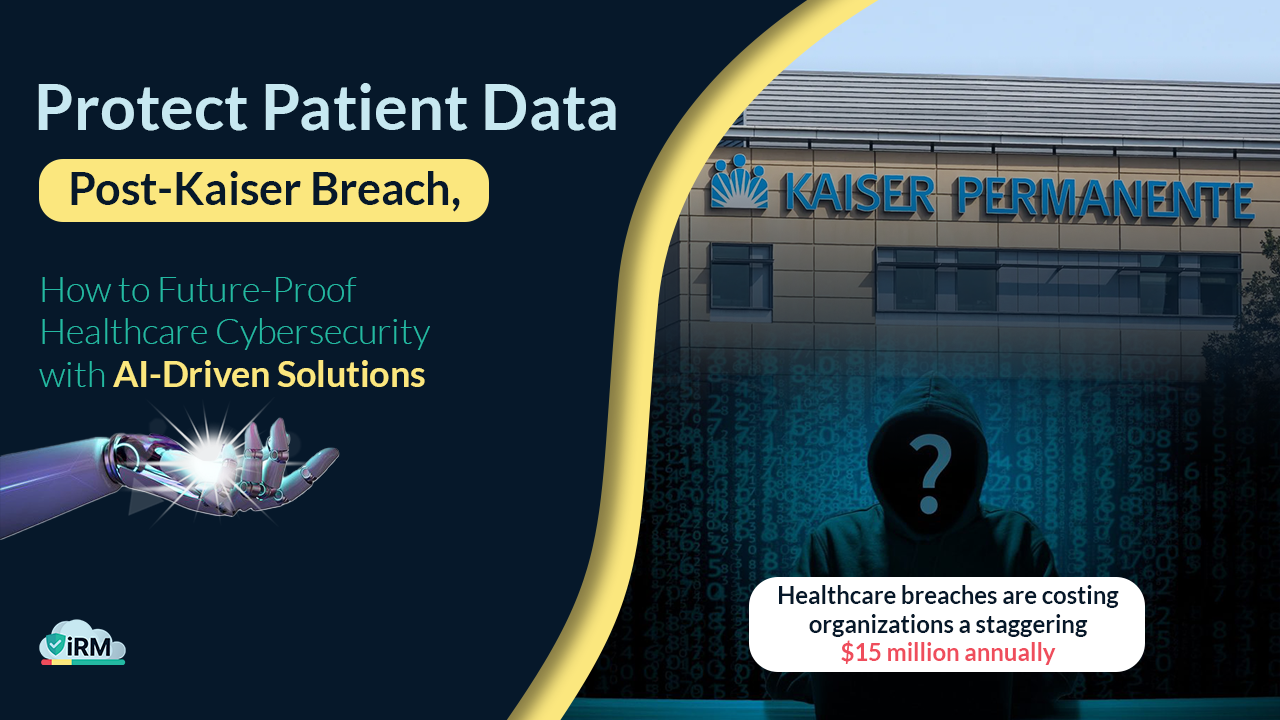
Protect Patient Data: Post-Kaiser Breach, How to Future-Proof Healthcare Cybersecurity with AI-Driven Solutions
Let’s get straight to the point. In 2025, healthcare breaches are costing organizations a staggering $15 million annually, and patient trust is disappearing faster than ever.
You don’t want your organization to be the next headline, do you? Let’s break down Kaiser Permanente’s 2025 ransomware attack and uncover the critical gaps in incident management that you can avoid. By the end of this blog, you’ll have actionable insights to strengthen your protocols and keep your patients’ data safe.
Kaiser Permanente’s 2025 Ransomware Attack: A Timeline
Okay, let’s break this down. In April 2025, Kaiser Permanente discovered unauthorized access to its systems, affecting a whopping 13.4 million patients. That’s like the entire population of a small country being exposed! The breach involved data being sent to third parties like Google and Microsoft Bing. Can you imagine the chaos? Patients’ info, medical records, and even insurance details were at risk.
Now, what did Kaiser do? They removed the compromised technologies and notified affected individuals. But here’s the kicker: Their delayed detection allowed attackers to steal data before they could contain the threat. This isn’t just a technical issue; it’s a massive trust issue. Patients expect their data to be safe, and delays like this erode that trust faster than you can say “ransomware.”
Pre-2025 Incident Management Flaws
Let’s talk about the elephant in the room: the flaws in incident management before 2025. Many healthcare organizations, including Kaiser, didn’t have AI-driven threat detection tools. This means breaches went undetected for weeks, sometimes even months. Think about it—attackers had plenty of time to steal data while organizations were clueless.
Then there’s the communication problem. Only 37% of healthcare providers had a documented communication plan in place. That’s like trying to put out a fire without a fire extinguisher. When breaches happen, patients and regulators are left in the dark, leading to more chaos and mistrust.
And let’s not forget compliance gaps. HIPAA checklists were treated like checkboxes on a to-do list, with no real focus on proactive measures like breach simulations and real-time monitoring. If your compliance is just a checklist, you’re setting yourself up for failure.
HIPAA Compliance: Beyond Checklists
Alright, let’s get real. HIPAA compliance isn’t just about ticking boxes. It’s about building a strong defense to protect patient data. Here’s what you need to do:
- Real-Time Monitoring: Tools like AI-driven EDR (Endpoint Detection and Response) can catch threats instantly. Organizations that use these tools have reduced breach costs by 60% in 2024. That’s a game-changer!
- Employee Training: Regular phishing simulations and cybersecurity workshops are non-negotiable. Kaiser’s lack of scenario-based training made their 2025 breach worse. Don’t let that happen to you.
- Breach Simulations: Practice makes perfect. Conduct quarterly breach drills to test your incident response plans. Industry benchmarks show that regular simulations can reduce response times by 45%. Think of it like fire drills for cyber threats.
Lessons from Other Breaches
Let’s learn from others’ mistakes. Anthem’s 2015 breach exposed 80 million records due to outdated firewalls. Kaiser’s 2025 incident highlighted third-party risks. Both show that multi-layered security is a must.
UCLA Health’s 2015 response included rapid patient notifications and free credit monitoring. Kaiser’s delayed notifications in 2025 were a stark contrast. Transparency matters, folks!
And let’s talk about ransomware trends. Groups like BlackCat are targeting healthcare more than ever. In 2025, 65% of healthcare breaches involved ransomware, up from 45% in 2024. That’s a scary upward trend you can’t ignore.
Solutions for Healthcare Providers
Okay, let’s get practical. Here’s what you can do:
- Deploy AI-Driven Threat Detection: AI tools can analyze network traffic and flag anomalies. Industry studies show AI solutions detected 98% of threats in 2024. That’s like having a 24/7 security guard for your data.
- Create Decentralized Incident Response Teams: Cross-functional teams can manage breaches more effectively. Mayo Clinic’s decentralized model reduced response times by 30% compared to centralized approaches. More eyes on the problem mean faster solutions.
- Vet Your Vendors Rigorously: Kaiser’s 2025 breach stemmed from third-party tech vulnerabilities. If you don’t check your vendors, you’re leaving the door open for attackers.
Future Risks and 2025 NIST Guidelines
Looking ahead, AI-powered phishing attacks are a real threat. By 2026, these attacks could bypass traditional filters. NIST’s updated guidelines recommend adopting generative AI detection tools. Don’t get caught off guard!
Zero-trust architecture is another must. NIST emphasizes strict access controls, and organizations adopting zero-trust saw a 55% reduction in breach incidents in 2025. Think of it as a “never trust, always verify” approach.
Predictive analytics is also key. Use it to anticipate attack vectors. Industry leaders have seen a 70% reduction in breach likelihood by implementing predictive models. Stay one step ahead of the bad guys!
Secure Your Healthcare Organization Today
Don’t let your patients’ data become the next headline. Ready to take action?
Every second of delay risks patient data—strengthen your protocols now. Contact Us Now → Let’s make sure your organization is protected. Your patients deserve it!