.png)

What Would You Do? Real-Life Risk Management Scenarios and Solutions
Risk management is a critical aspect of running any business. It involves identifying potential risks, assessing their impact, and implementing strategies to mitigate them. However, the real challenge lies in how organizations respond when faced with actual crises. This blog explores various real-life risk management scenarios, offering practical solutions and insights that can help businesses navigate uncertainties effectively.
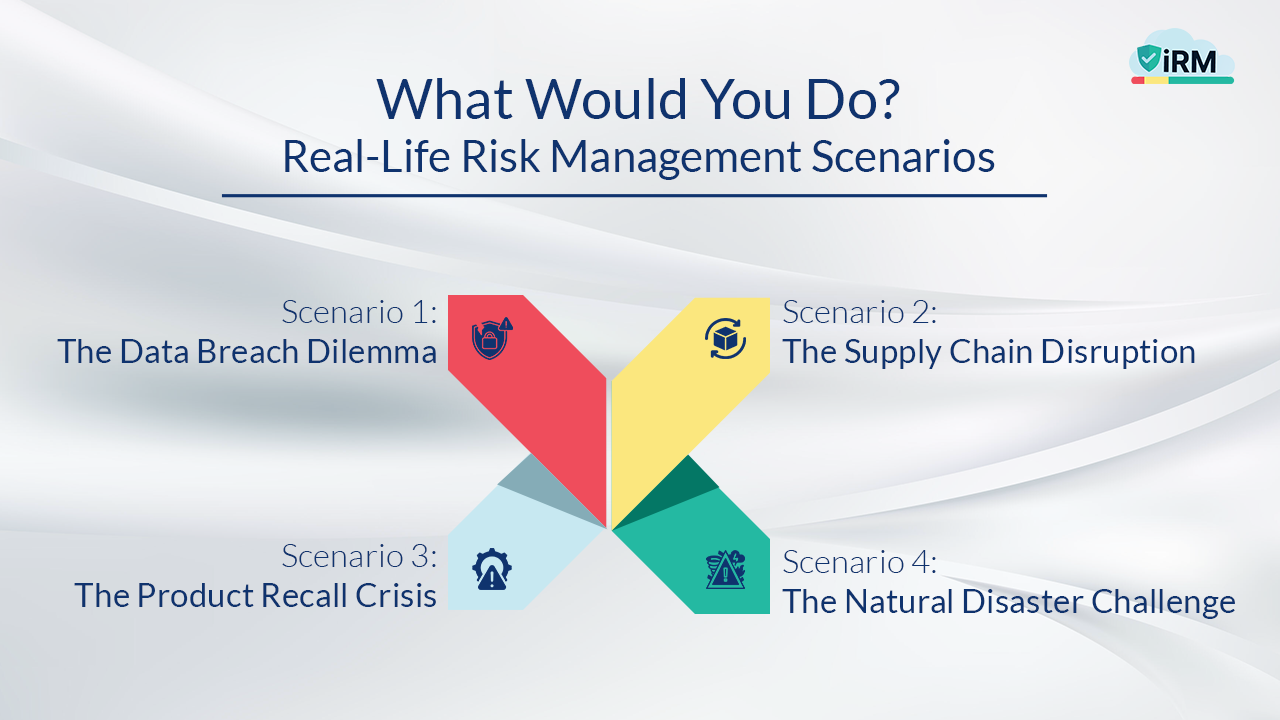
Scenario 1: The Data Breach Dilemma
Imagine you’re the IT manager of a mid-sized company. One morning, you receive an alarming notification that your company’s database has been breached. Sensitive customer information, including credit card details and personal identification numbers, may have been compromised.
What Would You Do?
- Immediate Response: The first step is to contain the breach. Disconnect affected systems from the network to prevent further data loss. Notify your cybersecurity team to conduct a thorough investigation and assess the extent of the breach.
- Communication: Transparency is key. Inform your leadership team and prepare a statement for affected customers. Let them know about the breach, what information was compromised, and the steps you are taking to address the situation.
- Engage Experts: Hire a forensic cybersecurity firm to analyze the breach and identify vulnerabilities in your system. This step is crucial for understanding how the breach occurred and preventing future incidents.
- Implement Changes: Based on the findings, update security protocols and invest in additional cybersecurity measures such as encryption, multi-factor authentication, and regular security audits.
- Monitor and Review: After addressing the immediate crisis, establish a continuous monitoring system to detect any unusual activity in your network.
Lessons Learned
- Preparation is Key: Regularly update your incident response plan and conduct training sessions for employees on recognizing phishing attempts.
- Communication Matters: Clear communication can help maintain customer trust even in challenging situations.
Scenario 2: The Supply Chain Disruption
You’re a supply chain manager at a manufacturing company when you learn that one of your key suppliers has gone out of business unexpectedly. This disruption threatens production schedules and could lead to significant financial losses.
What Would You Do?
- Assess Impact: Quickly evaluate how this disruption affects your production timelines and identify which products are most at risk.
- Identify Alternatives: Reach out to other suppliers who can fulfill your needs. Having a list of backup suppliers is crucial for situations like this.
- Negotiate Terms: Once you identify alternative suppliers, negotiate terms that allow for expedited shipping or bulk orders to minimize production downtime.
- Communicate with Stakeholders: Keep all stakeholders informed about potential delays and your plans to mitigate them. Transparency helps manage expectations.
- Review Supplier Contracts: After resolving the immediate issue, review contracts with suppliers to include clauses that address potential disruptions in the future.
Lessons Learned
- Diversification is Essential: Relying on a single supplier can be risky; diversify your supplier base to reduce vulnerability.
- Proactive Planning: Regularly assess risks within your supply chain and develop contingency plans to address potential disruptions.
Scenario 3: The Product Recall Crisis
As a product manager at a food manufacturing company, you discover that one of your products may be contaminated due to a supplier issue. A recall could damage your brand reputation and lead to significant financial losses.
What Would You Do?
- Initiate Recall Procedures: Immediately activate your product recall plan. Identify affected products and communicate with retailers to pull them from shelves.
- Inform Customers: Use multiple channels—social media, press releases, and email—to inform customers about the recall and provide instructions for returning the product safely.
- Investigate the Source: Work closely with your quality assurance team to determine how contamination occurred and what steps can be taken to prevent it in the future.
- Monitor Public Sentiment: Keep an eye on social media reactions and public sentiment regarding the recall. Address any concerns promptly to maintain trust with consumers.
- Evaluate Your Response: After managing the recall, conduct a thorough evaluation of your response process to identify areas for improvement.
Lessons Learned
- Swift Action is Crucial: Quick decision-making can minimize damage during a crisis.
- Customer Communication: Keeping customers informed helps maintain loyalty even during challenging times.
Scenario 4: The Natural Disaster Challenge
Your company’s headquarters is located in an area prone to natural disasters like hurricanes or floods. One day, severe weather warnings are issued for an approaching storm that could disrupt operations significantly.
What Would You Do?
- Activate Emergency Plans: Implement your emergency response plan immediately, ensuring that all employees are aware of safety protocols and evacuation procedures if necessary.
- Secure Assets: Take steps to protect physical assets by securing equipment, backing up data off-site, and ensuring that critical operations can continue remotely if needed.
- Communicate with Employees: Keep employees updated on safety measures being taken and provide guidance on how they should prepare their homes and families for potential impacts.
- Post-Disaster Recovery Plan: After the storm passes, assess damage and implement your recovery plan swiftly to restore operations as soon as possible.
- Review Preparedness Plans: Once everything is back to normal, review your emergency preparedness plans based on lessons learned from this event.
Lessons Learned
- Preparedness Saves Lives: Having a robust emergency response plan can protect both employees and assets during natural disasters.
- Regular Drills Matter: Conduct regular drills so everyone knows their role during an emergency situation.
Real-life risk management scenarios highlight the importance of preparation, communication, and adaptability in navigating crises effectively. By learning from these examples, organizations can develop robust risk management strategies that not only mitigate potential threats but also enhance resilience in an ever-changing landscape.
Are you ready to strengthen your organization’s risk management practices? Contact us today for expert guidance tailored to your specific needs!